
Lesson 19 — Ethics in Data and AI
Modern statistics and AI are powerful.
They analyze millions of records, make predictions, and even guide decisions.
But with this power come ethical responsibilities.
Bias in Algorithms
Algorithms learn from data.
If the data are biased, the algorithm will repeat — or even amplify — the bias.
Example:
- If past hiring data favored men, an AI trained on it may also favor men.
Lesson: Always ask, whose data are we using, and what history do they reflect?
Privacy and Data Use
Big data often comes from personal information: browsing, phones, sensors.
Students, patients, and citizens deserve protection.
- Informed consent
- Secure storage
- Respect for anonymity
Transparency and Accountability
AI systems are sometimes black boxes.
Users may not know how a decision was made.
Ethical practice means:
- Explaining decisions in plain language
- Allowing appeals and corrections
- Sharing responsibility between humans and machines
Example: Predictive Policing
- Data show more arrests in certain neighborhoods
- AI predicts more crime there → police increase presence
- Result: cycle reinforces itself
This shows why ethical reflection is essential.
Guiding Principles
- Fairness: avoid discrimination
- Privacy: protect individual rights
- Transparency: explain decisions
- Accountability: humans must remain responsible
Visuals
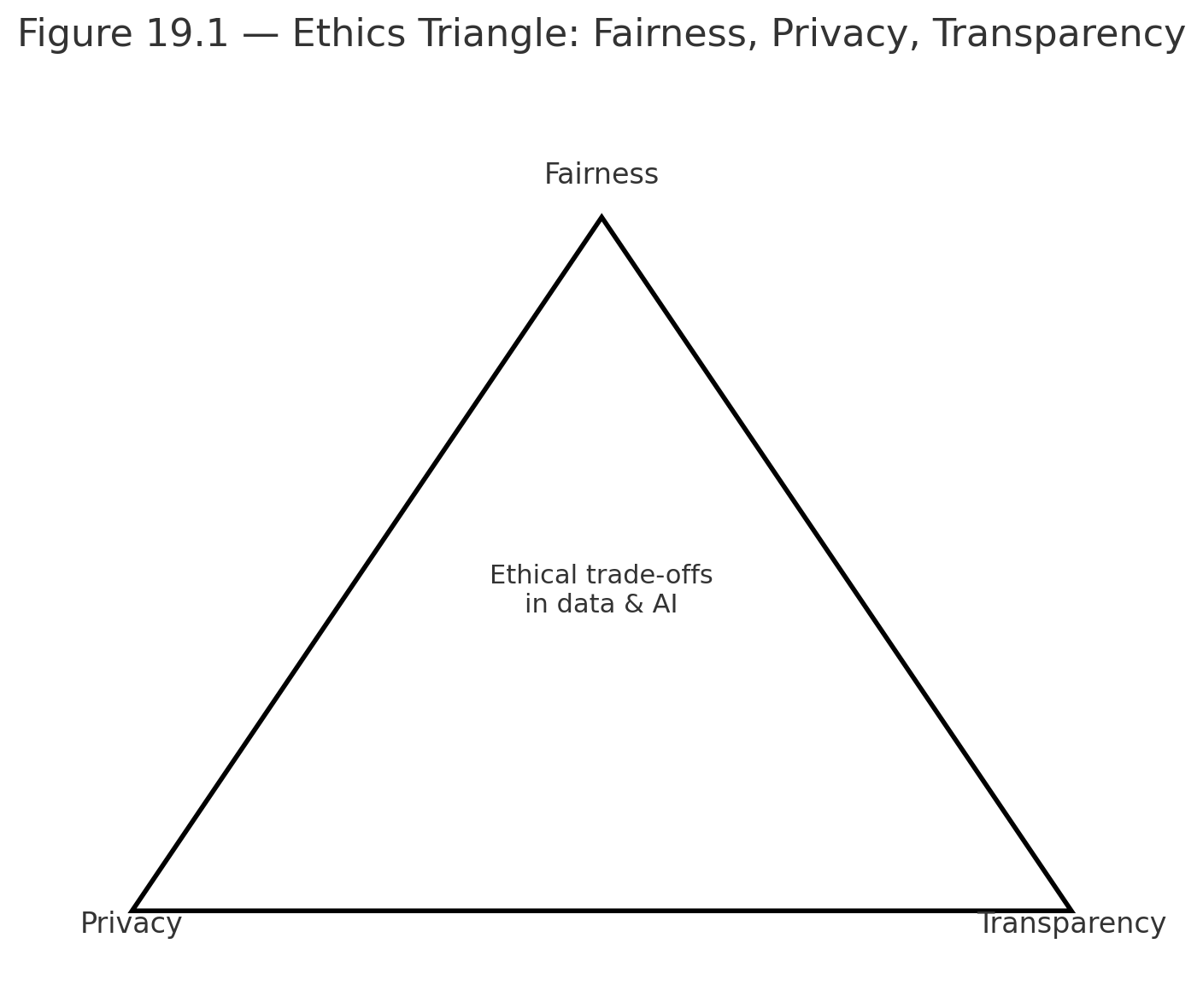
Figure 19.1 — Ethics Triangle: Fairness, Privacy, Transparency at the three corners.
Why This Matters
Statistics and AI are not only technical.
They are also social, cultural, and ethical.
Future scientists, teachers, and citizens must understand both the power and the responsibility of data.
Practice self-test quiz
In the space below, please find practice problems and self-test quizzes. For full access, please signup free.