
It’s a Saturday afternoon on a soccer field in New York.
You’re sitting in the stands with your friends, pretending to enjoy the game. The truth is, you’re not much of a soccer fan. You open your laptop and drift into your own world.
Your friends are shouting and jumping with excitement. You, on the other hand, are studying the players.
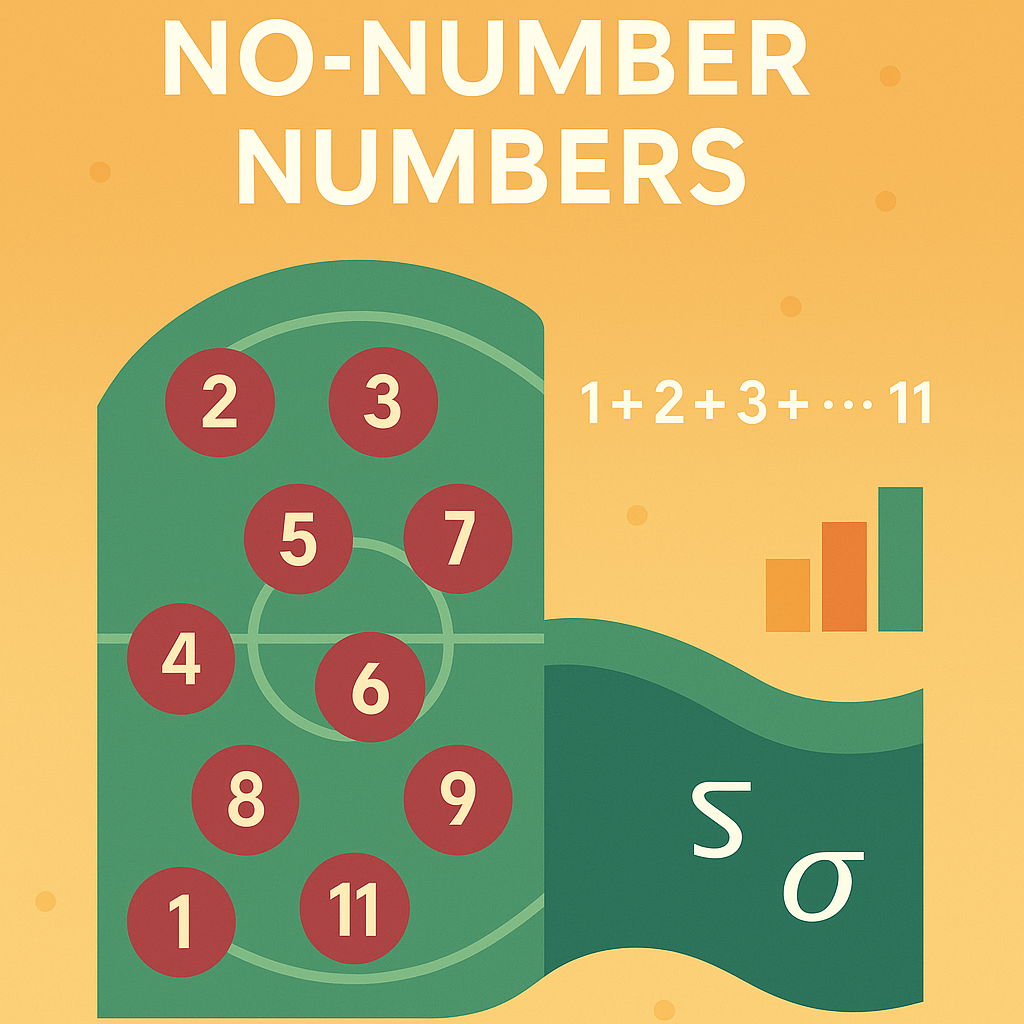
You notice the numbers on their shirts.
“Hey,” you say, “who’s the guy with the number 11? He must be the best on the team. Poor number 3—he’s probably one of the worst.”
Your friends give you a look that says, please stop talking.
Unbothered, you go further:
“Guys, if you add up all the numbers on their shirts—1 + 2 + 3 + 4 + 5 + 6 + 7 + 8 + 9 + 10 + 11—it’s 66!”
You grin, waiting for applause.
Nothing.
So you take it up a notch.
You open your laptop, punch in the numbers, and announce proudly,
“I just calculated the standard deviation of the team’s jersey numbers!”
You never finish your sentence.
Your friends grab you, laughing, and shove you gently into the aisle.
From Story to Concept: The Ordinal Scale
The story of the soccer field is about numbers that aren’t really numbers.
The digits on the players’ shirts don’t measure anything. They only distinguish. Number 11 isn’t better than number 3, and adding 8 and 9 doesn’t produce a meaningful 17.
These are nominal numbers—they serve as labels, not quantities.
But we’re about to move one step further, to the next great human leap: the moment when order enters the world of measurement.
Practice self-test quiz
In the space below, please find practice problems and self-test quizzes. For full access, please signup free.