

Artificial Intelligence (AI) aims to build systems that can learn, adapt, and make decisions.
One powerful tool is the neural network, inspired by the brain.
From Statistics to AI
- Regression predicts Y from X
- Logistic regression predicts probability (0–1)
- Neural networks generalize this idea: many inputs, many layers, nonlinear patterns
The Structure of a Neural Network
- Input layer — variables (X₁, X₂, …)
- Hidden layers — units that transform the input
- Output layer — prediction or classification
Each connection has a weight (like a slope in regression).
Formula for a Neuron
A single unit in the network:
$$z = \sum w_i X_i + b$$
$$y = f(z)$$
Where:
- $$w_i$$ = weights
- $$X_i$$ = inputs
- $$b$$ = bias (like an intercept)
- $$f(z)$$ = activation function (e.g., logistic, ReLU)
Learning in a Network
The network predicts outputs and compares them with the true answers.
The error is sent backward through the network to adjust weights.
This is called backpropagation.
Example
Predicting if a student will pass or fail based on:
- Study hours
- Attendance
- Practice problems completed
Inputs → combined with weights → logistic activation → output: probability of passing.
Visuals
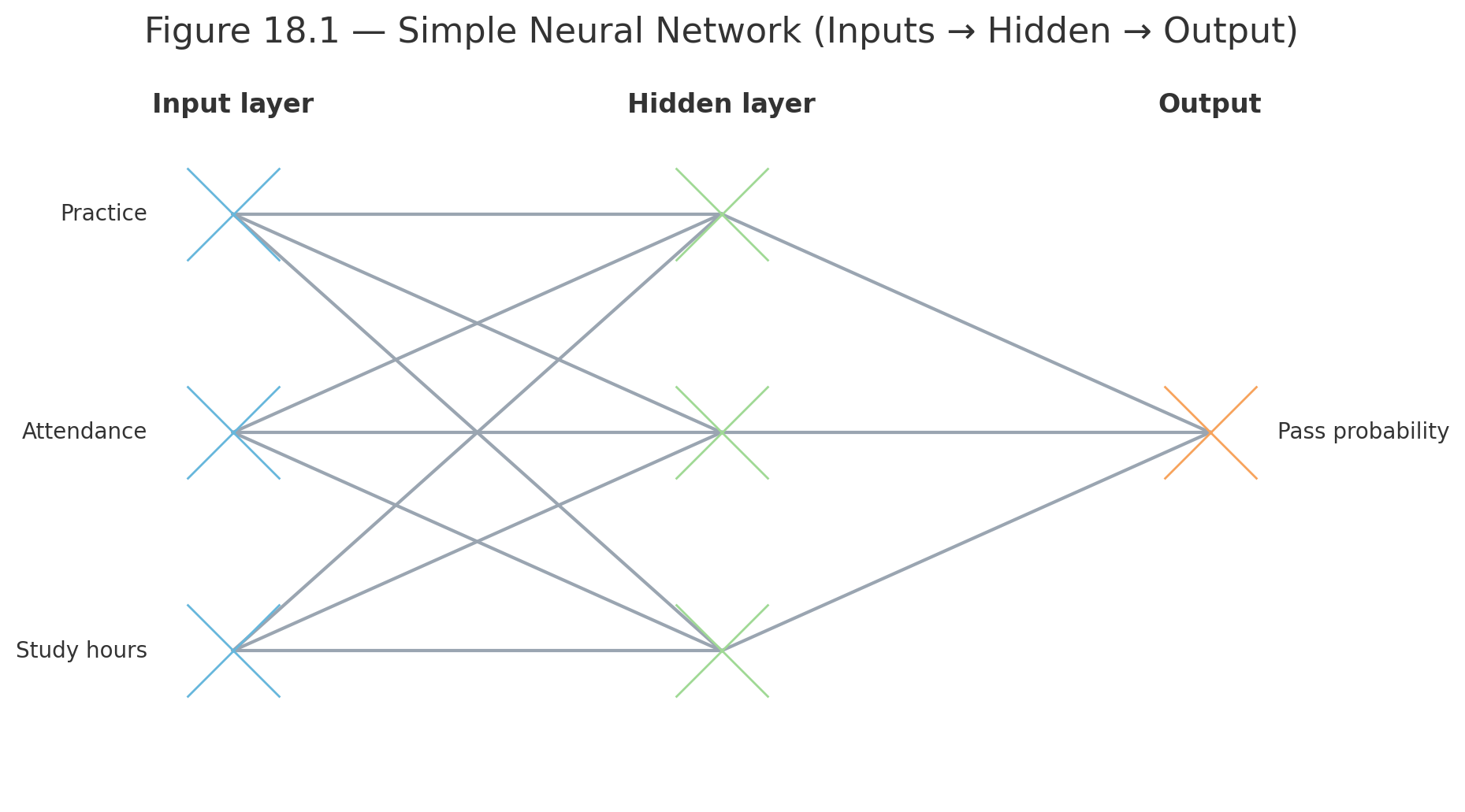
Figure 18.1 — Simple Neural Network (Inputs → Hidden → Output)
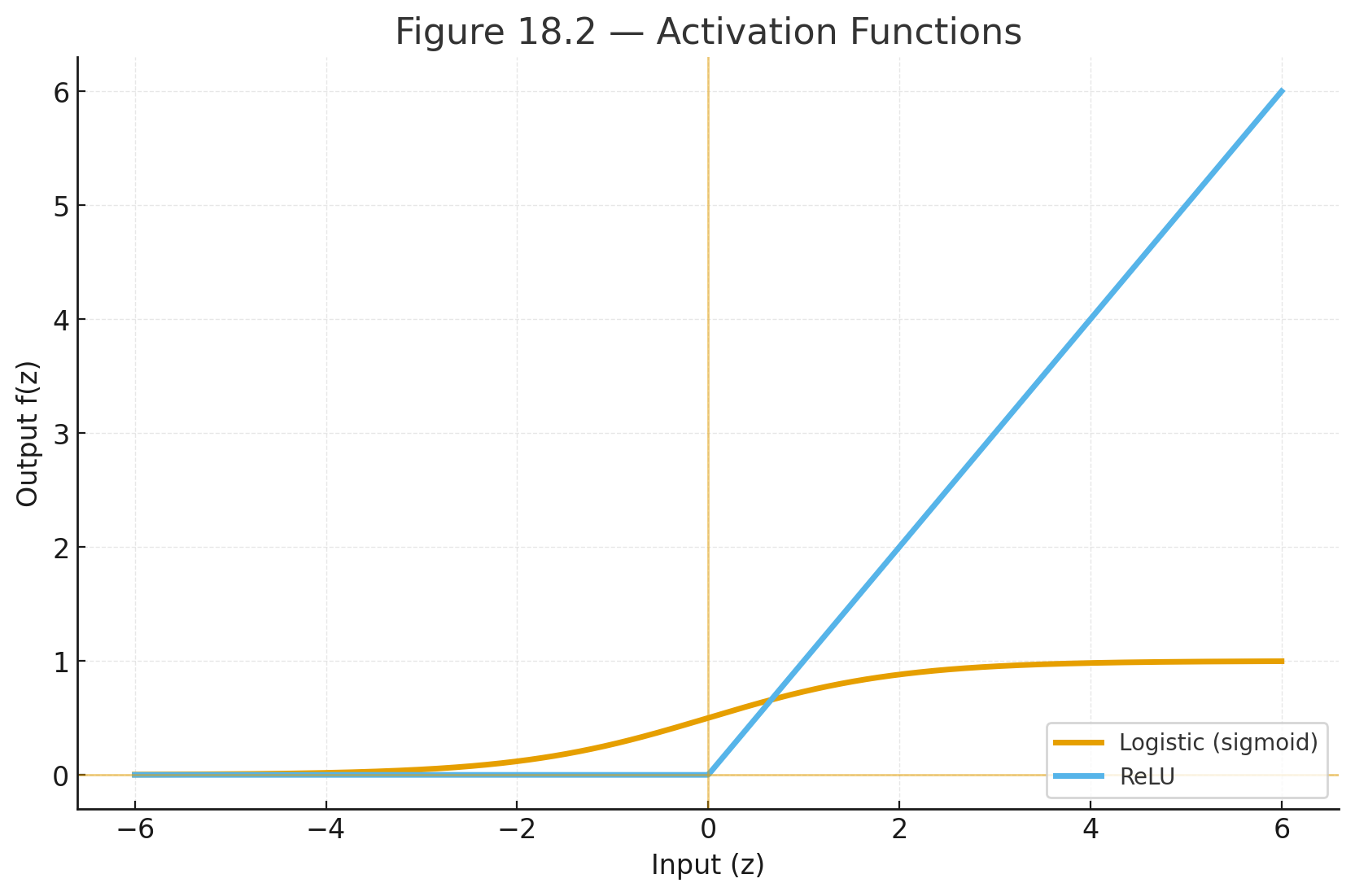
Figure 18.2 — Activation Functions
Why This Matters
- Neural networks extend regression and logistic regression.
- They allow learning from large, complex datasets (images, speech, language).
- Modern AI (translation, recognition, chatbots) is powered by these models.
Practice self-test quiz
In the space below, please find practice problems and self-test quizzes. For full access, please signup free.